Quick Facts
- Nickname: Caribbean of the Rockies
- Color Cause: Calcium carbonate suspension and light scattering
- Age: Ancient lake older than 250,000 years
- Best View: Logan Canyon Summit or North Beach Idaho
- Primary Activity: High-altitude boating, swimming, and winter snowmobiling
- Flora & Fauna: Four endemic fish species not found anywhere else on Earth
- Signature Treat: Garden City world-famous raspberry shakes
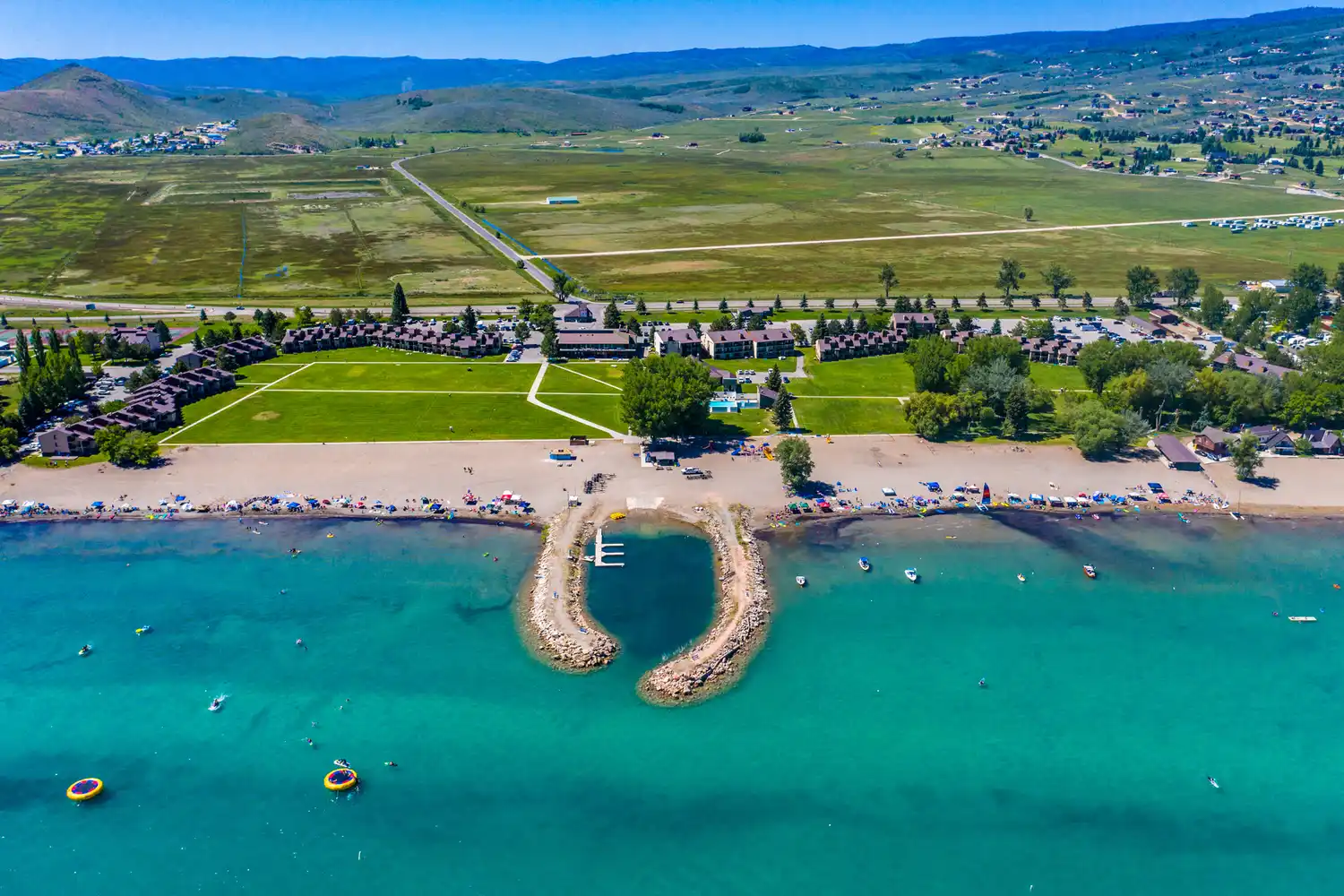
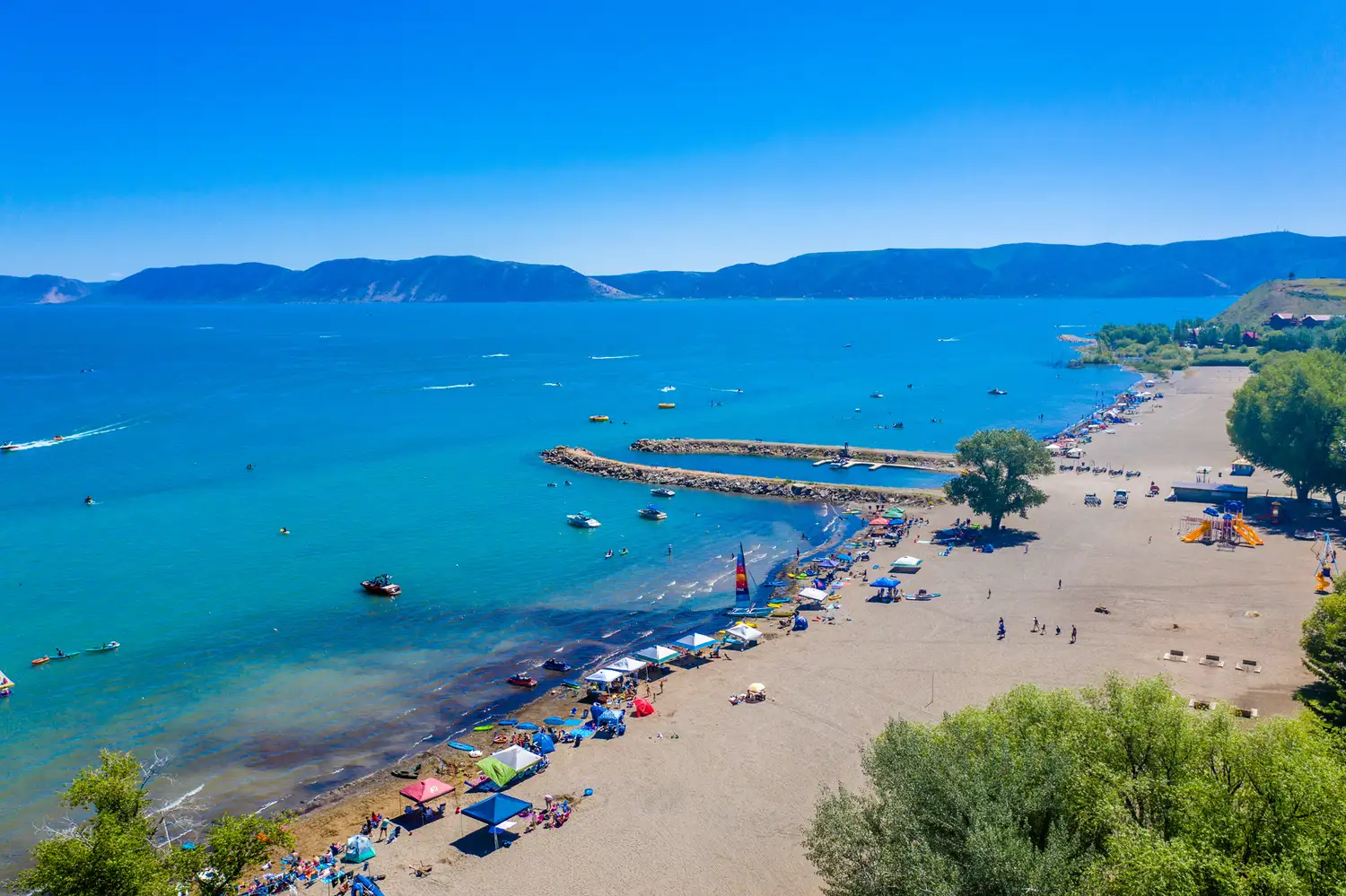
Bear Lake is often called the Caribbean of the Rockies because of its striking turquoise water, a visual phenomenon caused by the refraction of light off microscopic calcium carbonate particles suspended throughout the water column. This specific coloration, which rivals the clarity of tropical oceans, is a result of the mineral-rich runoff from the surrounding Bear River Range limestone.
The Geology of the Glow: Why Bear Lake is Turquoise
To understand why is bear lake turquoise, one must look at the unique chemical composition of the northern Rocky Mountains. Unlike many other alpine bodies of water that rely on glacial rock flour, bear lake owes its vibrant hue to calcium carbonate particles. These microscopic minerals primarily originate from the limestone-heavy Bear River Range that flanks the water. As spring runoff carries these minerals into the basin, the particles remain suspended, creating a natural mirror for the sky.
The physics involves light scattering physics where shorter wavelengths of light (blues and greens) are reflected back to the observer, while longer wavelengths are absorbed. The intensity of this glow can shift from a deep sapphire to a bright neon teal depending on sunlight and cloud cover. While the turquoise color of many other iconic Rocky Mountain lakes is caused by rock flour made of clay particles roughly 2–4 microns and silt roughly 4–65 microns, bear lake operates on its own mineral timeline.
The basin itself was formed by tectonic fault subsidence, allowing the lake to reach depths that stabilize the water temperature and clarity. Unlike seasonal reservoirs, this ancient geological formation has maintained its position for hundreds of thousands of years. The turquoise intensity of similar glacial-fed lakes in the region typically peaks during the summer melt months of July and August when the concentration of suspended minerals is highest, and bear lake followed a similar seasonal pattern of brilliance.
An Ancient Wonder: History and Freshwater Biodiversity
Spanning the border between Utah and Idaho, bear lake is recognized as one of the oldest lakes in North America. This ancient lake status dates back to the Pleistocene epoch history, meaning it has survived environmental changes that dried up many other prehistoric basins. Because of this long-term stability, the lake has become a crucible for evolution, sheltering a unique freshwater biodiversity that cannot be found elsewhere.
Travelers looking for the unique endemic fish of bear lake will find four specific species that have evolved in complete isolation. These include the Bonneville cisco, Bonneville whitefish, Bear Lake whitefish, and the Bear Lake sculpin. The lake is also a legendary spot for catching native cutthroat trout, which thrive in the deep, cold, limestone-rich waters. The presence of these endemic species makes the lake a vital site for biological research, proving that its value extends far beyond its aesthetic appeal.
Things to Do: Seasons at the Caribbean of the Rockies
A comprehensive garden city bear lake utah guide must emphasize that this destination is more than just a summer stop. While high-altitude boating and swimming are the main draws when temperatures rise, the area offers a robust 50-mile recreation loop that serves travelers year-round.
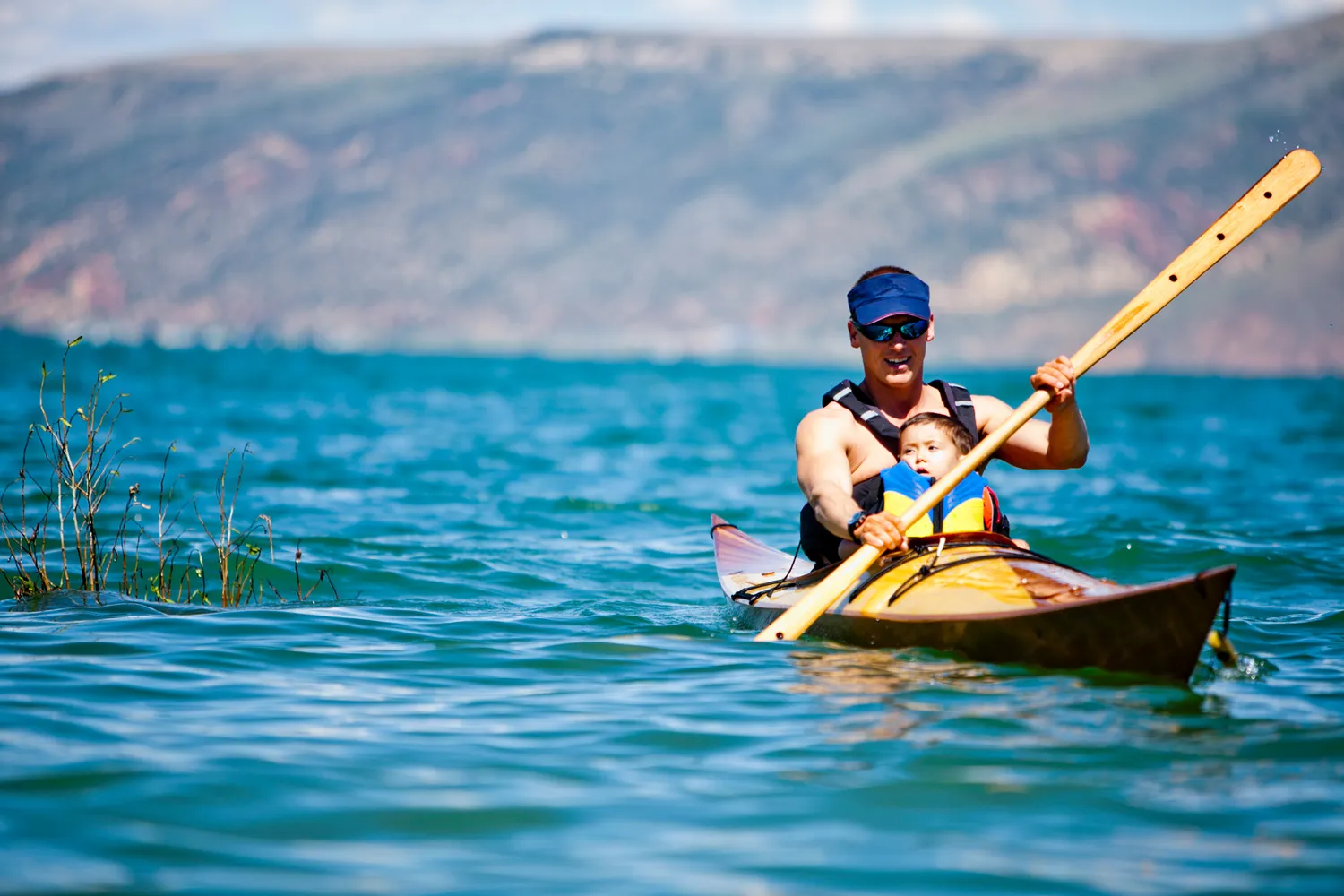
In the summer, the focus is undoubtedly on North Beach in Idaho and the Eastside of Bear Lake State Park in Utah. These spots offer some of the best summer water activities bear lake has to offer, including paddleboarding, sailing, and personal watercraft rentals. If you are visiting in early August, the Raspberry Days festival in Garden City is mandatory. The local harvest produces berries with a unique sweetness attributed to the high altitude and cool nights, leading to the town's famous raspberry shakes.
| Feature | North Beach (Idaho) | East Side State Park (Utah) |
|---|---|---|
| Shoreline Type | Gradual, sandy slope | Steep, rocky/pebbled drop-offs |
| Best For | Families with small children | Scuba diving and fishing |
| Entry Fee | Approximately $15-20 | Approximately $15-25 |
| Crowd Level | Very high in July | Moderate to High |
Winter recreation trails transform the landscape once the water temperature drops. The region offers over 350 miles of groomed snowmobiling trails, and downhill enthusiasts can head to nearby Beaver Mountain Resort. The annual Winterfest in January even features a Polar Plunge for the brave souls who want to experience the mineral-rich waters in their most frigid state.
Travel Logistics: Directions and Road Trip Strategy
Reaching this destination is an experience in itself. The most popular bear lake directions involve taking the Logan Canyon scenic byway, a stretch of Highway 89 that winds through the Uinta-Wasatch-Cache National Forest. This route offers dramatic limestone cliffs and towering pines before opening up to the famous "Logan Canyon reveal," where the turquoise water first comes into view from the summit.
Logistics at a Glance
- Driving from Salt Lake City: ~2 hours via I-15 and US-89.
- Peak Season: Last Saturday of June through mid-August.
- Park Hours: Typically 7:00 AM to 10:00 PM.
- Gateway Potential: Ideal stopover between Salt Lake City and the Grand Tetons or Yellowstone.
If you are following directions salt lake city to bear lake utah, plan for a two-hour journey. While bear lake ut is the primary destination for many, the border town of Fish Haven, Idaho, provides a quieter alternative for those looking to escape the hustle of Garden City. The lake's position makes it a perfect Grand Teton gateway for travelers heading north toward Wyoming’s national parks. Unlike Moraine Lake in Canada, which sits at an elevation of 1,885 meters and is famously fed by glaciers, bear lake offers a similarly breathtaking teal palette with more accessible beach access for swimming and recreation.
FAQ
Why is Bear Lake so clean?
The lack of significant industrial development around its shores and the natural filtration provided by its deep, ancient basin contribute to its clarity. Additionally, the limestone refraction process is most visible in water with low organic sediment, which signifies a healthy, well-oxygenated environment.
What's special about Bear Lake?
Aside from being one of the oldest lakes in North America, its turquoise color is rare for a non-glacial lake. It is also a site of high endemism, meaning it contains species of fish that evolved here over a quarter-million years and exist nowhere else on the planet.
Can you swim at Bear Lake?
Yes, swimming is a primary activity here. North Beach is the most popular for its shallow, sandy bottom, while the Utah side at Rendezvous Beach offers excellent facilities. The water is mineral-rich and refreshing, though the high altitude means it stays cooler than low-land reservoirs.
How deep is the bottom of Bear Lake?
The lake is roughly 208 feet deep at its maximum point. Because it was formed by tectonic shifts rather than just erosion, the floor drops off significantly in certain areas, particularly on the eastern shore, making it a popular spot for scuba divers.
Are there a lot of bears at Bear Lake?
Despite the name, you are not more likely to see a bear here than in any other part of the Rocky Mountains. The lake was named by early explorers and trappers in the early 1800s due to the abundance of black bears in the surrounding mountains at that time, but today, human visitors far outnumber the local wildlife.
Plan Your Bear Lake Adventure
Whether you are here for the limestone refraction or the legendary raspberry shakes, bear lake provides a geographic spectacle that stands apart from the typical alpine experience. The best bear lake things to do involve embracing the slow pace of Garden City while respecting the scientific marvel of the water itself. For the best experience, aim for a mid-week visit in July when the sun is at its zenith, maximizing that famous turquoise glow.